“You’re traveling to West Africa with your folding bike to raise money for a project in Uganda, with two people you’ve never met before and only know through Facebook? What if it turns out to be a scam? You must be mad!”
And so, on a sunny Thursday morning a short way down the coast from Dakar, I met Jonathan and James for the first time. These were the two people I was about to spend the next two weeks of my life with, cycling through sub-Saharan Africa to raise money for a community project in Uganda: The Kafunjo Project.
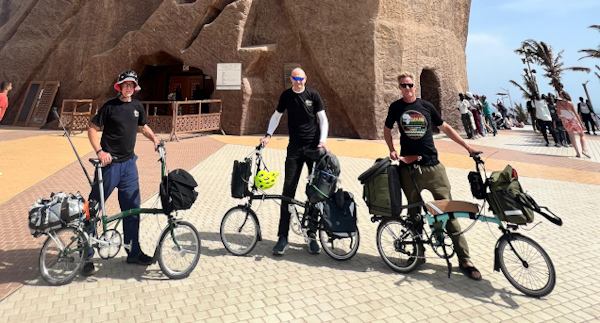
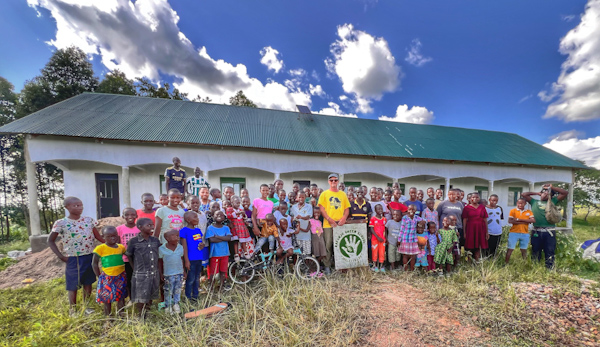
I’d originally come across Jonathan in a Brompton cycling group on Facebook. He’d posted a picture of himself and his trusty bicycle crossing the Tropic of Cancer on the edge of the Sahara Desert. I sponsored him £5 for the Kafunjo project, and he kindly messaged me back. I thought nothing more of it until Jonathan posted asking if anyone wanted to join him this year.
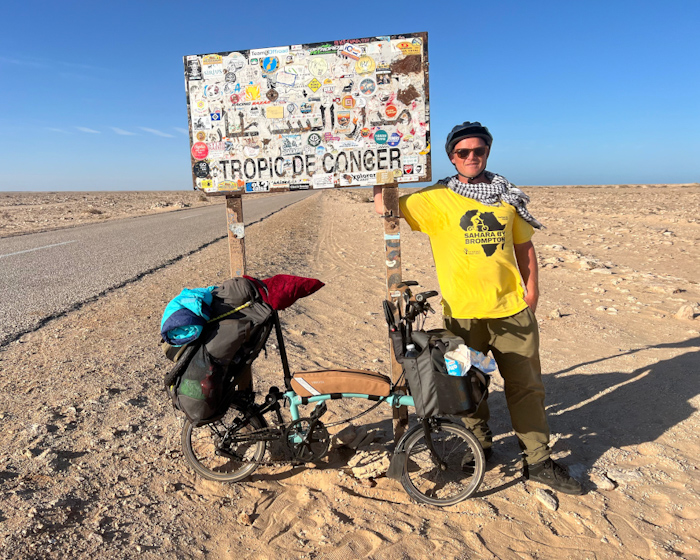
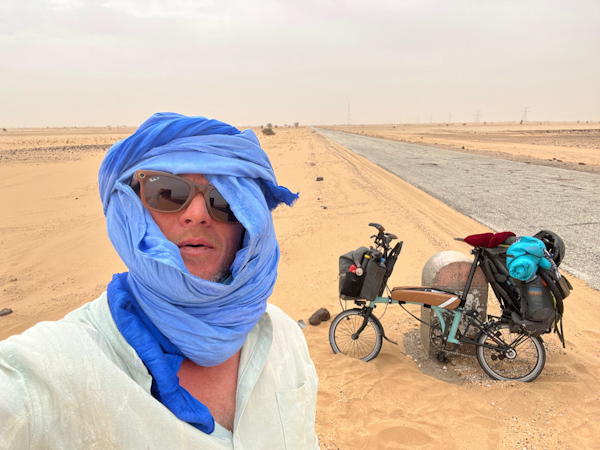
Just like that, it became three strangers meeting in Senegal for a big adventure. Nothing was properly planned—no route, no research, no support. It was all self-funded, traveling on a wing and a prayer, but following our mantra: “Walk and the path will be clear”
In the first few nervous exchanges that Thursday morning as we got to know each other, James mentioned that he hadn’t really ridden a bicycle since his paper round at age 13. Now aged 56, I thought he was madder than Jonathan or I; a Dakar rush hour is probably not the best place to re-learn how to ride. Especially not on a bike with tiny wheels on roads littered with potholes.
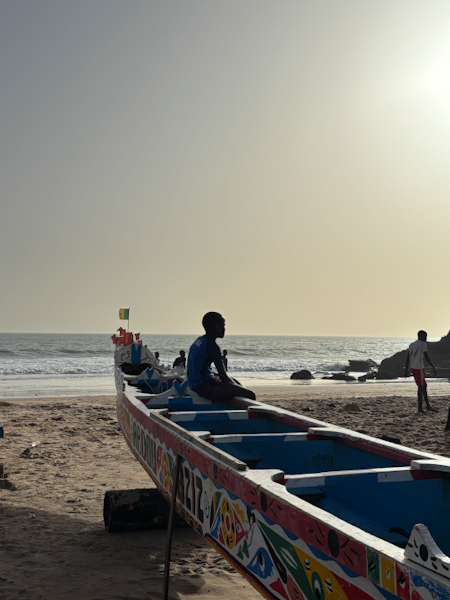
We piled our equipment—tents, mats, a few clothes, cooking gear, and our neatly folded bikes—into a taxi and plunged into the madness of the Dakar afternoon traffic. By the time we reached the African Renaissance Monument two hours later, Doudou, our taxi driver, promised never to drive people into the city again. Completely congested and lacking modern, coordinated traffic lights, the intersection was a free-for-all where everyone was left to fend for themselves.
James later let it be known that he was feeling quite anxious by the time we finally set off on two wheels. Horns blared around us—mostly as a warning rather than out of anger—as we wove our way through the afternoon rush hour. In and out we went, navigating people, carts, motorbikes, and trucks. You name it, the road had it. It was full beyond bursting, and three new bodies on small-wheeled bikes felt like just too much.
Given we had no real plan, all we had for the day was a vague idea that we needed to get far enough out of Dakar to find a place to sleep. After four crazy, dusty hours, and with the help of a bike computer, we managed to exit the city, find an apartment, and bed down for the night.
None of us really slept. We tossed and turned in our beds as we processed the day’s events, just glad we’d survived our foray into the jaws of the Dakar rush hour.
By morning, we decided we needed a plan and agreed that “no plan” was the plan. However, to guide our decision-making, we aimed for a place called Tambacounda in the southeast of Senegal, some 300 miles away. Under normal conditions, it was fairly doable in four days. What we didn’t know at the time was that Tambacounda is the hottest part of Senegal, and we were venturing there at the hottest time of the year.
With an optimistic, adventurous spirit, we set off out of the remaining urban sprawl along sandy roads. We soon learned that small wheels underneath heavily laden bikes don’t work well with deep sand; at times, we were forced off our bikes to push, sweat pouring from our bodies.
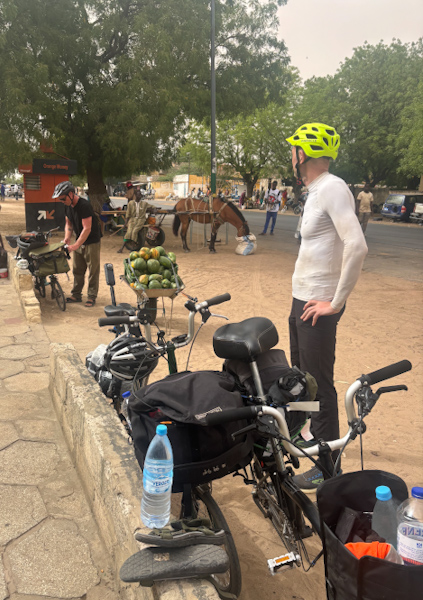
By the end of three days, we still had more than 100 miles to go, and the three of us desperately needed a break from the peak temperatures, which were soaring past 40°C. I was especially suffering, as the malaria pills I was taking seemed to be affecting my heat tolerance. It was only when we got talking to a local who warned us that it would get even hotter as we neared Tambacounda that we decided to re-plan our plan and head south. Jonathan managed to find a proper campsite in The Gambia, some 100km south of our position. Given they advertised pizza and a bar stocked with cold beers, it seemed like a highly sensible decision.
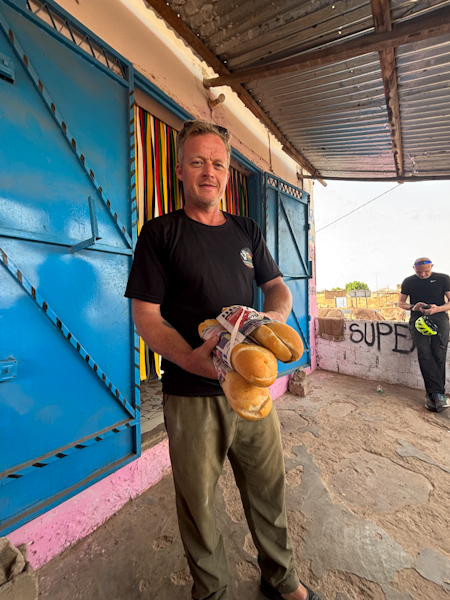
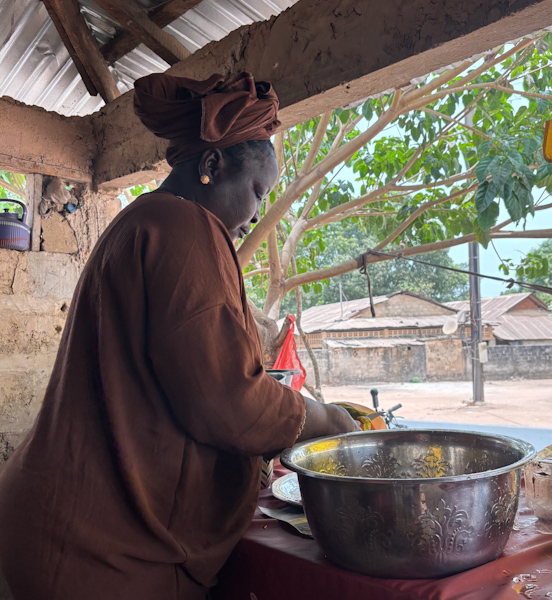
Over the previous few days, the variety in our diet had severely diminished; we were mostly eating tinned sardines, processed cheese, and kids’ yogurt sachets, all washed down with gallons of water. On occasion, we managed to find different things. Goat stew sandwiches in a roadside hut one evening is something I won’t soon forget—delicious! Egg and onion sandwiches increasingly became a favorite and were easy to find. As was Touba coffee, famous in Senegal: sweet, intense, and flavoured with cloves.
We knew the road would be unpredictable, as there was a large section that was completely unsurfaced. Just as we’d become complacent, about two or three hours into our day, the route decided to play us in a game of good track, bad track. First came some good track, followed by bad track, with the bad track deteriorating further by the mile.
Realizing that the route held a royal flush, we abandoned the game of path poker and trekked overland through thick, broken brush. We crossed a couple of ravines gouged out by flash rains through the millennia and finally made it back onto a track that we knew to be straight and true.
Passing through the Gambian border, we stocked up on local currency. Feeling confident, we cycled over the massive Gambia River bridge and down to the place we’d arranged to stay—only to find the fridge was switched off and bare. Pizza was out of the question; the owner had run out of cash and needed our camping fees just to help pay for the following week’s electricity.
The following day, we decided that the best option was to head back toward the coast. Two long days of cycling lay ahead, but we were happy because we were on an adventure. The only problem with turning toward the coast was that we faced two days of relentless headwinds—winds that gradually sapped the strength from our legs hour by hour as the temperature rose.
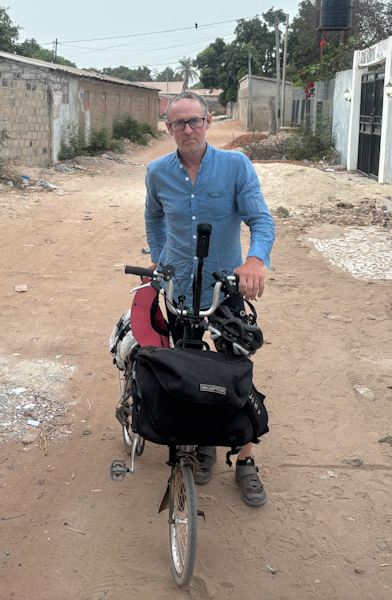
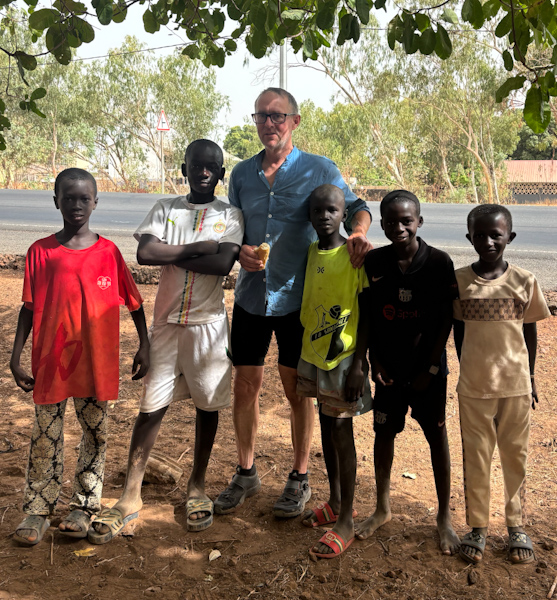
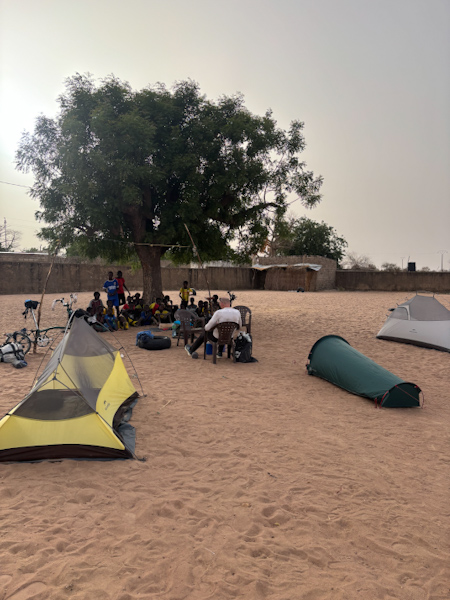
Along the journey, we met so many kind people that at times it became overwhelming. On one of many memorable encounters, as dusk was drawing in, we cycled into a remote village. Wanting to find a nice place to camp—having slept on the side of the road the previous two evenings—we asked in the village shop if there was somewhere we could set up. The shopkeeper directed us to a house across the road where the village chief lived. The chief kindly walked us over to the local school to meet the headmaster, who immediately took us under his wing. He gave us water to wash with, and we set up camp right in the school grounds. It was a wonderful evening spent watching the children play football.
In every village and town along the way, we were greeted with an incredibly warm welcome. It was rare to go more than a few miles without a greeting or a wave from people of all ages. Children, especially, were excited by the sight of three men on bikes with small wheels. We often sat down beside the road to talk to whoever was around; football always proved to be a great way of connecting and establishing common ground.
After making it back to the coast in The Gambia, we took a well-earned rest day to visit the monkey park before heading south once more toward the border with Guinea-Bissau. What we originally thought would be a grueling two-day stretch ended up being probably the nicest day of cycling on the entire trip. It was slightly cooler, and we had a beautiful tailwind at our backs as we crossed from The Gambia back into Senegal.
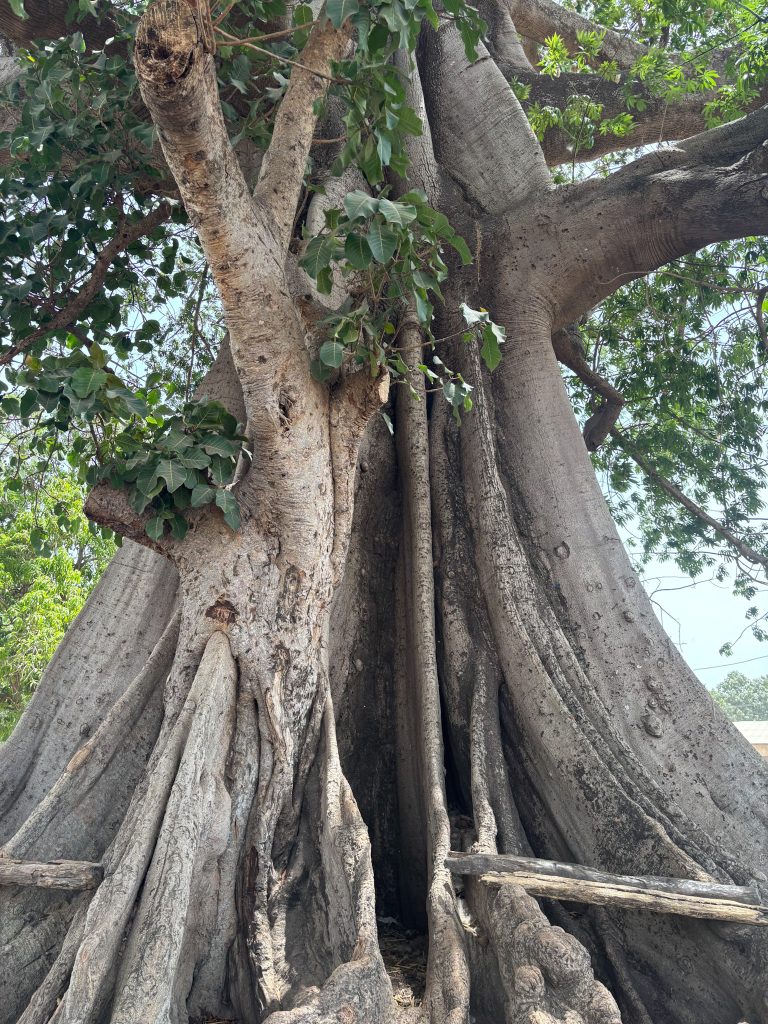
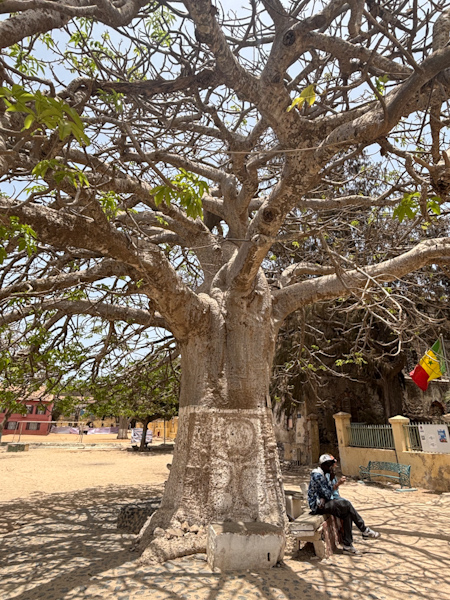
The landscape changed dramatically as we rode. We encountered more trees, fenced fields, and sprawling rice paddies. Some of the trees were so vast you could barely see the tops—offering a fleeting glimpse further east into the lush forests of West Africa.
Just as we were tiring, the road decided to play with us once more, serving up a brutal 10km stretch of concrete cobbles in the 37°C afternoon heat. With our bikes clattering violently on the rough, bumpy surface, we finally made it to our target: Ziguinchor.
It was a place of mixed emotions. We felt immensely proud that we’d managed to reach the Guinea-Bissau border together, but sad that this was the spot where James and I would say goodbye to Jonathan, sending him deeper into West Africa while we turned back north toward Europe.
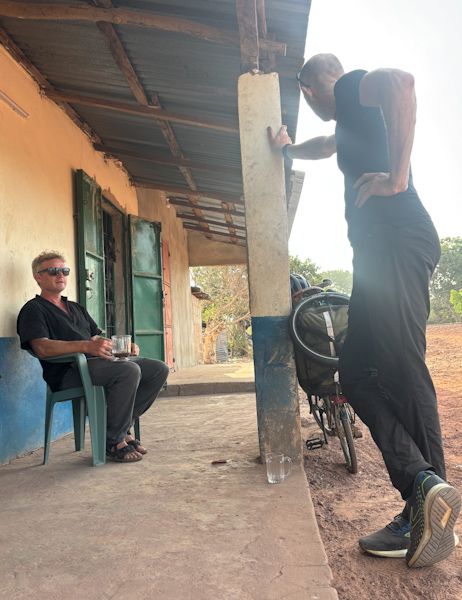
There are so many more stories from this trip—a journey rich in human encounters, deep connections, and shared endeavor. I return home completely humbled by the kindness and generosity of the people of Senegal and The Gambia. It has been an absolute joy and privilege to cycle alongside Jonathan and James. James is returning home to tackle new challenges, trying his hand next at triathlons, while Jonathan continues his epic journey into beautiful West Africa on his trusty Brompton. You can follow his progress on Instagram and Facebook.
“Walk and the path will be clear!”
you can support our fundraising activities by donating to the Kafunjo project here
https://www.crowdfunder.co.uk/p/kafunjo-overland-by-brompton
And the trip was featured on SeekTravelRide